Introduction
Psilocybin is having a scientific moment. What was, for most of the twentieth century, a compound confined to ethnobotany papers and counterculture folklore is now the subject of Phase 3 clinical trials, university neuroscience departments, and a fast-growing peer-reviewed literature. Despite the surge of media coverage, a surprising number of articles conflate basic facts about it, confusing psilocybin with psilocin, misdescribing its mechanism, or skipping the chemistry entirely in favor of anecdote.
This article starts from the molecule itself: what psilocybin is, chemically and pharmacologically, where it occurs in nature, how it was identified, and why it behaves so differently in the body from the compound most people associate with its effects. It draws on peer-reviewed pharmacology and neuroscience literature throughout, so it can serve as a reliable reference point for the more specialized topics, pharmacokinetics, metabolism, degradation, clinical evidence, covered elsewhere in this series.
Nothing in this article is medical advice, and nothing here addresses dosing, sourcing, or how to obtain psilocybin. Psilocybin remains a Schedule I controlled substance under U.S. federal law, with narrow, regulated exceptions in a small number of states. Where legal status is discussed, it is discussed as a factual matter, not a how-to.
Definition: What Is Psilocybin, Precisely?
Psilocybin (chemical name: 4-phosphoryloxy-N,N-dimethyltryptamine, molecular formula C₁₂H₁₇N₂O₄P) is a naturally occurring tryptamine alkaloid produced by roughly 200 species of fungi, most of them in the genus Psilocybe. It belongs to a broader chemical family called the tryptamines, which also includes serotonin itself, melatonin, and other psychoactive compounds such as DMT (N,N-dimethyltryptamine).
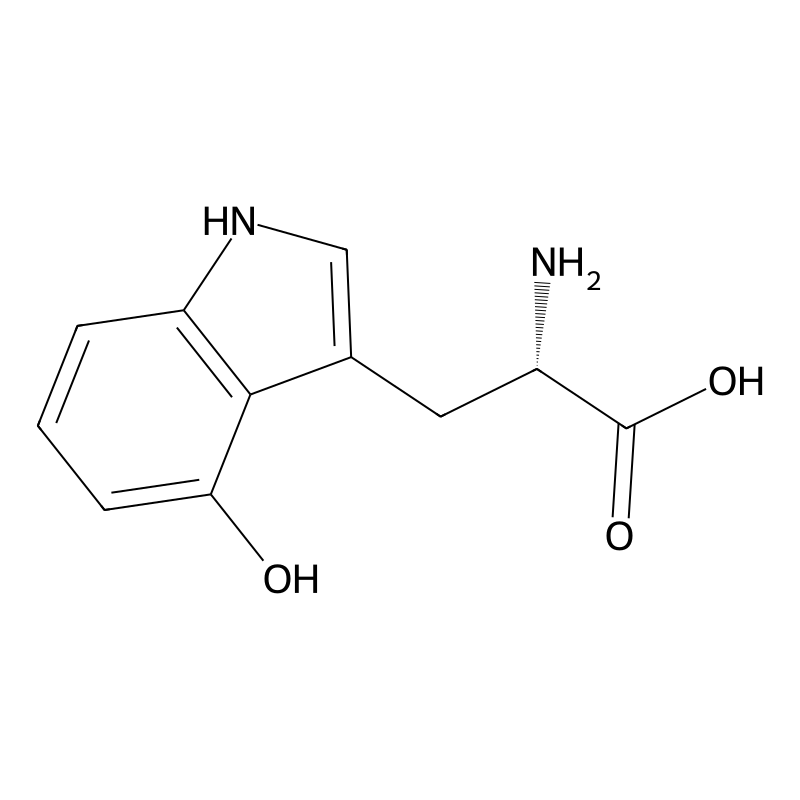
Structurally, psilocybin is built around an indole ring, the same core scaffold found in serotonin, with a dimethylated amine group and a phosphate ester attached at the 4-position of the ring. That phosphate group is the single most important structural feature to understand, because it defines how psilocybin behaves once it enters the body.
Psilocybin itself is not the compound responsible for the psychoactive effects associated with "magic mushrooms." It is a prodrug: a molecule that is pharmacologically inert, or nearly so, until the body converts it into an active form. In psilocybin's case, that active form is psilocin.
Prodrug Chemistry: Why Psilocybin Needs to Be Converted
A prodrug is a compound designed by nature (or, in pharmaceutical chemistry, deliberately engineered) to be metabolized into an active drug after administration. Prodrugs are common in medicine, codeine converts to morphine, valacyclovir converts to acyclovir, and the phosphate-ester prodrug strategy is a well-recognized approach in pharmaceutical chemistry more broadly.
For psilocybin, the phosphate group serves a specific chemical purpose: it makes the molecule considerably more water-soluble and more chemically stable than psilocin, which oxidizes readily when exposed to air and light. Once ingested, that phosphate ester is rapidly cleaved by alkaline phosphatase enzymes and non-specific esterases, primarily in the intestinal wall and liver. Peer-reviewed pharmacology literature is consistent on this point: once ingested, psilocybin is rapidly dephosphorylated by alkaline phosphatase enzymes to form psilocin, the compound that goes on to exert the characteristic psychoactive effects by binding primarily to serotonin (5-HT) receptors in the brain.
This dephosphorylation step happens quickly, within minutes of absorption, which is part of why psilocybin itself is difficult to detect in blood plasma for long after ingestion, while its metabolite psilocin appears rapidly and persists for hours. Basel-based clinical pharmacology researchers studying the compound's metabolism describe psilocybin as undergoing rapid first-pass metabolism, in which its terminal phosphate group is cleaved almost immediately by alkaline phosphatases and non-specific esterases upon oral ingestion.
The practical implication is one that trips up a lot of casual science writing: when people talk about the "effects of psilocybin," they are, pharmacologically speaking, describing the effects of psilocin. Psilocybin is the delivery vehicle; psilocin is the active ingredient. The distinction matters enough that it gets its own dedicated article later in this series (see: Psilocybin vs Psilocin).
Mechanism of Action: What Happens After Conversion
Once converted to psilocin, the molecule acts primarily as an agonist, and more specifically, a partial agonist, at serotonin 5-HT2A receptors, with additional activity at other serotonin receptor subtypes including 5-HT1A and 5-HT2C. This receptor interaction is considered central to psilocin's influence on perception, cognition, and affective processing, and is the mechanistic thread that runs through nearly every downstream effect attributed to psilocybin.
The 5-HT2A receptor is densely expressed in the prefrontal cortex and other cortical regions involved in mood regulation, sensory integration, and executive function, regions that play a major role in regulating mood, anxiety, and emotional state more generally. Activation of this receptor by psilocin is thought to be the primary driver of both the acute perceptual effects associated with classical psychedelics (altered sensory processing, changes in the subjective sense of self) and, over a longer time course, the changes in neural connectivity that are of particular interest to psychiatric researchers studying depression and related conditions.
It's worth noting that psilocybin's mechanism is studied not only in humans but across a range of experimental models, from fruit flies to zebrafish to rodents, precisely because the conserved serotonergic signaling machinery lets researchers isolate molecular pathways that are harder to study directly in human subjects. Zebrafish, in particular, offer genetic tools and high-throughput screening capabilities that let researchers identify key molecular pathways and connect findings from simpler invertebrate models to the more complex neural dynamics observed in mammals. Interestingly, the metabolic conversion step itself does not appear to be universal across species: in fruit flies, there is currently no direct evidence that the transformation of psilocybin into psilocin occurs naturally, though recent findings suggest psilocybin may still produce functional behavioral effects in Drosophila even without confirmed conversion, a genuinely open question in current research.
This cross-species divergence matters for a practical reason: the timeline and intensity of psilocin's effects differ substantially between species, which complicates the translation of animal findings into predictions about human pharmacology. In humans, psilocin plasma levels typically peak around two hours after oral administration and have an elimination half-life of roughly 2–3 hours, whereas in mice psilocin is cleared much faster, often with a half-life under one hour. Researchers designing translational studies have to account for this divergence explicitly rather than assuming rodent dosing and timing data will map cleanly onto human trial protocols, a recurring theme in the pharmacokinetics and metabolism articles later in this series.
Receptor binding alone doesn't fully explain psilocin's pharmacology, either. Downstream of receptor activation, psilocin engages intracellular signaling cascades, including Gq-protein-coupled calcium flux, that differ in magnitude and duration depending on the specific receptor subtype and brain region involved. This is part of why closely related tryptamines, even ones that bind the same receptor with similar affinity, can produce meaningfully different behavioral profiles. A related compound found alongside psilocybin in many mushroom species, norpsilocin, illustrates the point: it behaves as a near-full agonist at the human 5-HT2A receptor in laboratory calcium-flux assays, yet shows no psychoactive properties in behavioral experiments with mice, a discrepancy researchers attribute to its likely inability to cross the blood-brain barrier, or to rapid degradation of its chemical structure once inside the body. The lesson for anyone trying to reason about psilocybin's mechanism from receptor affinity alone: binding a receptor in a dish and producing an effect in a living organism are two different pharmacological questions, and the gap between them is where much of current mechanistic research is concentrated.
Natural Sources: Where Psilocybin Comes From
Psilocybin does not occur in isolation in nature, it is one of several related psychoactive tryptamines produced by fungi in this family, typically alongside smaller amounts of psilocin, baeocystin, and norbaeocystin. The compound is found across a taxonomically diverse set of roughly 200 fungal species, the overwhelming majority of which fall under the genus Psilocybe, though psilocybin-producing species have also been documented in genera such as Panaeolus, Gymnopilus, Pluteus, Inocybe, and Conocybe.
The most extensively studied and most commonly encountered species in both the ethnomycological and research literature is Psilocybe cubensis, which is discussed in depth in a dedicated article in this series (see: Psilocybe cubensis: Taxonomy and Characteristics). Other notable species include Psilocybe azurescens and Psilocybe semilanceata, both known for notably higher psilocybin content per gram of dried tissue than P. cubensis, and Psilocybe mexicana, which holds a particular place in the compound's discovery history.
Psilocybin concentration is not fixed even within a single species, it varies meaningfully by growing substrate, harvest stage, genetic strain, and post-harvest handling. This variability is one of the central practical challenges facing analytical researchers working with fungal material, and it's explored in more depth in the Psilocybin Stability and Factors Affecting Psilocybin Degradation articles later in this series.
Discovery and Etymology
Psilocybin was first isolated and chemically characterized in 1958 by the Swiss chemist Albert Hofmann, the same chemist who first synthesized LSD two decades earlier, working at Sandoz Laboratories. Hofmann isolated the compound from Psilocybe mexicana specimens supplied following ethnomycological fieldwork in Oaxaca, Mexico, where the mushrooms had long been used in indigenous Mazatec ceremonial contexts. Hofmann and his colleagues went on to determine the compound's chemical structure and to synthesize it, along with its dephosphorylated metabolite, which they named psilocin.
The name "psilocybin" derives from the genus name Psilocybe, which itself comes from the Greek psilos ("bare" or "smooth") and kybe ("head"), a reference to the smooth cap characteristic of many species in the genus. This etymology has nothing to do with the compound's pharmacological properties, it's purely a naming convention inherited from the fungal taxonomy of the source organism.
Legal and Regulatory Status
Psilocybin is classified as a Schedule I controlled substance under the U.S. Controlled Substances Act, a classification reserved for substances the federal government defines as having a high potential for abuse and no currently accepted medical use, a classification that predates, and has not kept pace with, the current clinical research literature. The same Schedule I status, or close equivalents, applies in most countries worldwide.
That federal picture, however, is not the whole picture. The regulatory landscape has been shifting quickly over the past several years:
- Oregon created the first state-regulated psilocybin services framework via Measure 109, passed in 2020, under which licensed service centers began operating in 2023, offering supervised administration sessions through licensed facilitators. Personal possession outside this licensed program remains illegal in Oregon.
- Colorado passed the Natural Medicine Health Act (Proposition 122) in 2022, which decriminalized personal possession and use of psilocybin, along with several other natural psychedelics, for adults 21 and older, and separately established a regulated, licensed therapeutic access program.
- A number of U.S. cities have adopted local decriminalization measures, meaning possession is deprioritized for enforcement. This is legally distinct from legalization and does not create any lawful supply chain.
- Separately from all of the above, the FDA has granted psilocybin Breakthrough Therapy designation on two separate occasions, first in 2018 for treatment-resistant depression, and again for major depressive disorder, a regulatory designation intended to expedite the development and review of drugs that show substantial promise over existing treatments in early trials. Breakthrough Therapy designation is not the same as approval, and it does not make psilocybin legal to possess, prescribe, or dispense outside of an authorized clinical trial or the specific state programs described above.
This legal complexity is precisely why the clinical research infrastructure around psilocybin looks the way it does, trials run under DEA and FDA authorization, using pharmaceutical-grade synthetic material manufactured and handled under strict institutional protocols, a topic covered from the research-literature side in the final cluster of this series.
Why Psilocybin Is a Serious Subject for Pharmacological Research
The renewed scientific interest in psilocybin is not simply cultural momentum, it reflects a genuine and growing evidence base. Recent systematic reviews of the pharmacokinetics, pharmacodynamics, clinical efficacy, and safety profile of psilocybin describe emerging evidence supporting its potential efficacy in conditions including major depressive disorder, treatment-resistant depression, anxiety, alcohol use disorders, and cancer-related distress. At the same time, the same body of literature is candid about the limits of what is currently known: significant barriers remain, including methodological constraints, regulatory hurdles, and limited population diversity across existing clinical trials.
The molecule has also become a template for medicinal chemistry innovation in its own right. Because psilocybin's natural prodrug design has real pharmacokinetic limitations, variable first-pass metabolism, a relatively short psilocin half-life, and stability challenges in formulation, researchers are now engineering novel synthetic prodrugs and psilocin derivatives aimed at improving bioavailability, shelf stability, and dose predictability for potential clinical use. Some of this work targets an entirely different therapeutic goal: modifying psilocin's pharmacokinetic profile to shorten and soften the acute psychoactive experience while attempting to preserve the longer-term therapeutic signal reported in psilocybin-assisted treatment studies, an approach aimed specifically at making treatment protocols more clinically practical. This active line of medicinal chemistry research is covered in more depth in the Psilocybin Pharmacology and Current State of Psilocybin Research articles later in this series.
Frequently Asked Questions
Is psilocybin the same as psilocin? No. Psilocybin is a prodrug found in the mushroom itself; psilocin is the active metabolite the body produces after psilocybin is broken down by enzymes. Psilocin is what actually binds serotonin receptors and produces psychoactive effects.
What type of compound is psilocybin? Psilocybin is a tryptamine alkaloid, part of the same broad chemical family as serotonin, melatonin, and DMT, with a phosphate ester group that classifies it specifically as a prodrug.
Which mushrooms naturally contain psilocybin? Roughly 200 fungal species produce psilocybin, most in the genus Psilocybe. Psilocybe cubensis, Psilocybe semilanceata, Psilocybe azurescens, and Psilocybe mexicana are among the most studied.
Is psilocybin legal? Psilocybin is a Schedule I controlled substance under U.S. federal law. Regulated exceptions exist in Oregon and Colorado through licensed, supervised state programs; several cities have deprioritized enforcement through local decriminalization measures. Legal status varies by jurisdiction and continues to evolve.
Why is psilocybin being studied by the FDA if it's Schedule I? Schedule I status governs general legality; it does not prevent authorized clinical research. The FDA has granted psilocybin Breakthrough Therapy designation to expedite trials for depression, which allows study under specific DEA- and FDA-authorized research protocols separate from general legal access.
Does psilocybin work the same way in all animals? No. While the core mechanism, conversion to psilocin and activation of serotonin 5-HT2A receptors, is broadly conserved across mammals, the speed of metabolic conversion, the resulting half-life, and even whether the conversion happens at all vary meaningfully between species, which is one reason animal research findings don't always translate directly into predictions about human pharmacology.
Key Takeaways
- Psilocybin is a naturally occurring tryptamine prodrug found in roughly 200 fungal species, most in the genus Psilocybe.
- It is not itself the primary psychoactive agent, the body converts it into psilocin via rapid enzymatic dephosphorylation, primarily in the gut and liver.
- Psilocin acts as a partial agonist at serotonin 5-HT2A receptors, the mechanism believed to underlie both its acute perceptual effects and its longer-term effects of research interest.
- Pharmacokinetics differ meaningfully across species, which complicates translating animal research directly into human predictions.
- The compound was first isolated in 1958 by Albert Hofmann from Psilocybe mexicana.
- Psilocybin remains Schedule I federally in the U.S., with narrow regulated exceptions in Oregon and Colorado, alongside active FDA Breakthrough Therapy–designated clinical research.
This article is for scientific and educational purposes only. It does not provide guidance on acquisition, dosing, or use of psilocybin, and is not a substitute for professional medical or legal advice.